Spring Tide ~7 days
Full moon and new moon. Sun and moon line up, their pulls stack, and the high tides go 20–30% higher than average — lows go correspondingly lower. Nothing to do with the season.
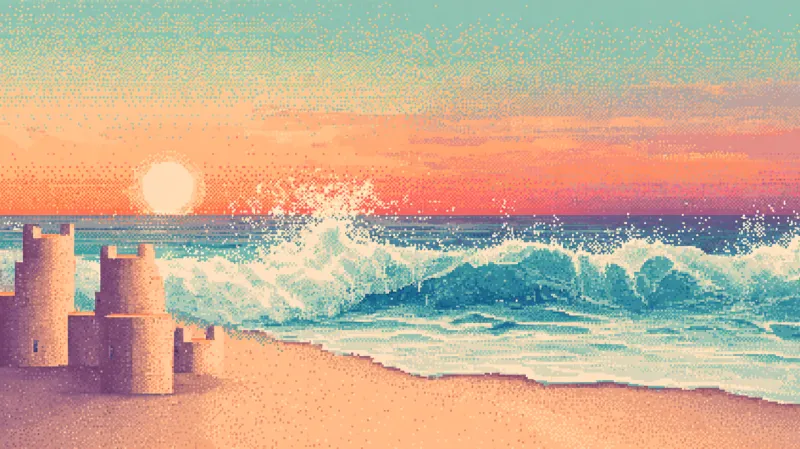
a day at the beach from the comfort of your home
A pixel beach that runs on its own. Click anywhere on the sand to place a sandcastle — the tide will slowly creep in and wash it away. Four themes, seagulls, tide physics. No score, no goal, no winning. Just waves.
tap or click anywhere to build a sandcastle
Bright midday sun. Crystal water, pale sand, the noisiest seagulls of the bunch.
Open this beach →Golden hour. Warm waves and long shadows pulling everything sideways.
Open this beach →Cold-water coast. Pale sand, blue-grey tide, castles that look carved from ice.
Open this beach →Moonlit shore. Quiet, slow, and the foam catches starlight on its way out.
Open this beach →Add &speed=calm, normal, or surge to any link to set the tide pace.
The ocean has two bulges at all times — one on the side facing the moon, one on the side facing away. Earth spins through both of them every 24 hours, so any given beach passes a high tide roughly every 12 hours and 25 minutes. The sun does the same thing, weaker, and when the two line up or fight each other you get the biggest and smallest tides of the month.
Full moon and new moon. Sun and moon line up, their pulls stack, and the high tides go 20–30% higher than average — lows go correspondingly lower. Nothing to do with the season.
First and third quarter moons. Sun and moon pull at right angles and partially cancel out — highs are 10–15% lower, lows higher. The whole tidal range squashes flat.
A day at the beach, by the clock
Some coasts skip a beat — the Gulf of Mexico gets one tide a day, the South China Sea gets a mix. Local geography (basin shape, ocean depth, coastline angle) decides which of the moon's beats actually reach a given shore. Pixel Tide skips all of that and just runs one clean sine wave.